Cyber Security in the Netherlands

While cyberattacks shook critical infrastructure across Europe, the Netherlands chose collaboration over isolation, turning shared challenges into a collective strength that you can now be part of. Mark Ruijsendaal, Program Director for Innovation at Security Delta (HSD), captures this transformation: “I think in general that we have a pretty strong ecosystem in cybersecurity because of the involvement of both government, research, education, and business.” His understated assessment masks a quiet revolution that has reshaped global digital defence.
People on their phones
Camilo Jimenez

The Dutch government’s vision extends beyond traditional defensive cybersecurity. The principle of cybersecurity by design now underpins policy, meaning all products and systems on the market must be cybersecure by default, shifting responsibility to manufacturers and designers at the earliest stages. This shift is not a gradual evolution; it is a deliberate architecture. The Netherlands has a robust cybersecurity ecosystem that includes communities, multiple regional innovation hubs and prominent cybersecurity companies. The current government policy is to bring the various parts and players in this ecosystem together even more and establish a strong collective focus on products that are cybersecure by design and by default. Security Delta (HSD) is a prominent cybersecurity cluster strongly connected with ecosystems in Apeldoorn, Amsterdam, Eindhoven, and other regions, which drive innovation and collaboration. The Netherlands has multiple regional cybersecurity ecosystems, including the Brainport Cyber Resilience Centre (Eindhoven) and FERM in maritime/port protection.

The Dutch story isn’t just national; it’s global. Founders, highly skilled migrants, and international talent increasingly choose the Netherlands for its innovation-friendly climate, collaborative culture, and central role in Europe’s digital economy. Their ideas and experiences enrich the ecosystem and open doors for anyone looking to make a tangible impact.


Definition & Importance

The Netherlands has pioneered a collaborative approach to cybersecurity, integrating government, research, education, and business. This model transforms cybersecurity from reactive defence into proactive resilience building. Through intensive sharing of threat data and joint expertise, the country demonstrates how security thrives on cooperation rather than isolation.

Arkadiusz Ostrycharz, Engineering Director at HackerOne, brings an international perspective to this ecosystem. Originally from Poland, he built his career in software engineering and leadership before moving into cybersecurity. After time in Amsterdam and Poland, he returned to the Netherlands to join HackerOne’s engineering office in Groningen. For him, the country’s innovation climate and collaborative culture create fertile ground for advancing digital trust and security.

"Cybersecurity is not just an IT concern anymore. You have regulations, business continuity, and brand trust. Governments and companies alike need to build trust so that people feel safe using their platforms and applications.”

- Arkadiusz Ostrycharz, Engineering Director HackerOne
 

With 99% broadband penetration and nearly one-third of Europe’s data centres located around Amsterdam, the Netherlands stands as a digitally advanced economy maintaining exceptional cybersecurity standards. The Netherlands’ strong digital economy, with renowned digital infrastructure providers, deep integration of digital and traditional trade sectors, and a proactive government, drives technological innovation and application.


Market Size & Growth

The Dutch cybersecurity market, valued at €2.35–2.75 billion in 2025, is projected to reach €3.27–5.18 billion by 2030–2032. This expected growth offers a wealth of opportunities for innovators, experts, and entrepreneurs to make a real impact.

Digitalisation, evolving threats, and stricter regulations drive growth. Over 85% of Dutch businesses use digital technologies, solidifying the country’s role as a European cybersecurity hub.

Government and private investments foster continuous innovation. The Dutch cabinet allocated €21.6 million for advanced research under the Challenges in Cyber Security program, while Invest-NL and private investors committed €15 million to TIN Capital’s Cyber Tech Fund V for cybersecurity startups. Together, these public and private initiatives create a dynamic environment where talent can develop, test, and scale new solutions. 

Cloud security leads the market, projected to generate €270 million by 2030 (25.3% CAGR). Data privacy technologies and robust legal frameworks drive the Dutch data security market to €121.6 million. Large enterprises control 73% of market revenue, but SMEs are the fastest-growing user base with an 8.9% CAGR. Finance and healthcare sectors prioritise cybersecurity budgets driven by connected devices, open banking requirements, and compliance mandates.


Segment-Specific Insights

Security services, including managed detection and response, are the fastest-growing offerings, especially among SMEs requiring scalable, around-the-clock protection. Healthcare and financial sectors are leading verticals in cybersecurity spending, driven by connected medical devices, open banking, and evolving compliance mandates.


Productivity and Economic Impact

Cybersecurity safeguards the digital backbone of the Dutch economy, contributing approximately 6% to GDP. It minimises downtime across critical sectors such as finance, logistics, and manufacturing. In 2022, 2.2 million citizens reported online crime incidents, prompting a €111 million public investment through the National Cybersecurity Strategy 2022–2028.

The country’s extensive broadband and data-centric infrastructure, coupled with leadership in financial services and logistics, makes cybersecurity a critical and rapidly growing economic pillar for the Netherlands.


Key Players & Market Share

The Netherlands cybersecurity market demonstrates how global technology leaders and innovative domestic companies collaborate within a unified ecosystem to drive industry-wide advancement.

Global giants, including PwC Nederland, Microsoft, IBM, Cisco, Booz Allen Hamilton, Palo Alto Networks, and Fortinet, dominate large enterprise segments. Local innovators have achieved international recognition for specialised innovations.

“If you want to make a broader impact as an individual, it might be worthwhile to work for smaller businesses. Your knowledge can really make a difference at these businesses."

- Mark Ruijsendaal, Program Director for Innovation Security Delta (HSD)


Beyond traditional cybersecurity companies, Dutch manufacturers increasingly embed cyber resilience into their operations. ASML, NXP, Philips, and VDL Groep exemplify how producing companies integrate cybersecurity by design from semiconductor chips to medical devices and industrial machinery. VDL’s 2021 ransomware attack, which halted operations and disrupted supply chains including ASML and Philips, underscores the reason all manufacturing companies must prioritise cyber-skills training.

Homegrown champions like EclecticIQ and Zivver showcase Dutch strengths in AI-driven threat intelligence and secure communications. Sentyron, the Netherlands’ cybersecurity pioneer, has been providing EAL7+-certified crypto solutions to the Dutch government and defence for over 25 years. WebSec has published over 150 CVEs, showcasing its strong expertise in penetration testing. Eye Security and ON2IT specialise in AI-driven threat detection and zero-trust security services. 

Established Dutch security vendors such as Sentyron provide advanced cryptographic and network security solutions for governments, defence, and other mission-critical environments. Northwave, headquartered in Utrecht, delivers integrated cybersecurity services and incident response across Europe, illustrating how Dutch service providers operate at an international scale. Guardian360 offers continuous vulnerability scanning and monitoring services tailored to Dutch and European regulatory requirements, helping organisations maintain ongoing insight into their security posture. Tesorion, a 100% Dutch cybersecurity company, combines managed detection and response (MDR), offensive security, and incident response to support organisations across critical sectors in the Netherlands.

Government institutions such as the National Cyber Security Centre (NCSC)Europol, and NATO recruit experts to safeguard national and international digital networks.


Shivaprasad Mynahalli, Founder & Director TelcoSolve
Shivaprasad Mynahalli
The Netherlands is one of Europe’s leading countries for innovation, and also a cybersecurity hub. Whenever standardisations or recommendations are collected from across the European region, the final decision often happens in the Netherlands

Technology Advancements

The Netherlands plays a constructive role in AI-driven cybersecurity, including real-time threat detection, automated incident response, and quantum-resistant encryption. Companies such as EclecticIQ use machine learning to enhance behavioural analysis and reduce false positives. Mark Dorenbusch, Director of the Centre for Safety and Digitalisation, is at the forefront of cybersecurity innovation and partnership in Apeldoorn. Under Mark’s guidance, CVD has emerged as a nationally recognised hub, where professionals, students, and organisations collaboratively address security and digitalisation challenges and deliver practical solutions. His perspective underscores Apeldoorn’s reputation as a strong regional powerhouse for developing cybersecurity talent and its significant real-world impact on society.

"From a strong regional core in Apeldoorn, the growing cybersecurity sector has a strong demand for experts in threat intelligence, incident response, cloud security, and ethical hacking. It offers professionals ample opportunities to work on current security challenges with real social impact."

Mark Dorenbusch, Director, CVD


Zero Trust models and IoT security are rapidly expanding, protecting over 18 million connected devices and growing at a rate of 22% annually. National initiatives in post-quantum cryptography prepare the country for future encryption challenges. Close collaboration between industry and research produces viable and scalable solutions.


Regulatory & Policy Environment

Dutch regulatory strategy demonstrates how thoughtful policy development can drive innovation while ensuring comprehensive protection. Dutch policymakers turn regulation into incentives for innovation. 

The National Cybersecurity Strategy is the primary Dutch policy framework that guides investments and actions strengthening national cyber resilience. The strategy prioritises intelligence sharing, workforce development, centralised oversight, and public-private collaboration. In 2025, the Ministry of Economic Affairs designated cybersecurity technologies as one of the Netherlands’ key fields of innovation and crucial for maintaining its global economic position. The Action Agenda Cybersecurity Technologies, presented in January 2026, outlines the actions to realise the national ambitions in this field. 

The 2026 Cybersecurity Act transposes the EU’s NIS2 Directive, expanding oversight to 18 critical sectors and applies to medium and large enterprises. The Dutch Data Protection Authority enforces strict data protection and promotes cooperation, reporting a 30% rise in breaches in 2022. The National Cybersecurity Strategy prioritises intelligence sharing, workforce development, centralised oversight, and public-private collaboration. 

For the ecosystem, this means growing needs for stricter regulatory compliance, higher standards for security practices, and increased collaboration between private companies and government agencies. For businesses, this means investing in talent, tools, and processes while collaborating closely with public agencies, creating opportunities for cybersecurity professionals and startups to deliver solutions that meet evolving requirements.


Investment Climate

The Netherlands combines robust venture capital with strategic policies fueling cybersecurity innovation. Rising threats and accelerated digitalisation have created investment opportunities, attracting both domestic and international capital. 

“The Netherlands also has quite strong ties with both other European countries and with the European Commission, but also with other countries across the world. Therefore, the Netherlands serves as a gateway to Europe for businesses looking to expand internationally.”

Mark Ruijsendaal, Program Director for Innovation, Security Delta (HSD)
 

TIN Capital’s European Cyber Tech Fund V, based in Amsterdam, has raised over €80 million and received an additional €15 million in Dutch backing, supporting cybersecurity firms such as EclecticIQ, Eye Security, BreachLock, and SignPath.

Enterprises invest an average of €1.9 million annually in cybersecurity, with per-employee spending averaging €3.39 on cloud security and €8.54 on data security. Cybercrime causes nearly €1.2 billion in estimated financial damages each year. Security Delta anchors this thriving ecosystem, enabling innovation and global cooperation. Together, these figures illustrate a thriving and well-supported cybersecurity ecosystem in the Netherlands. 

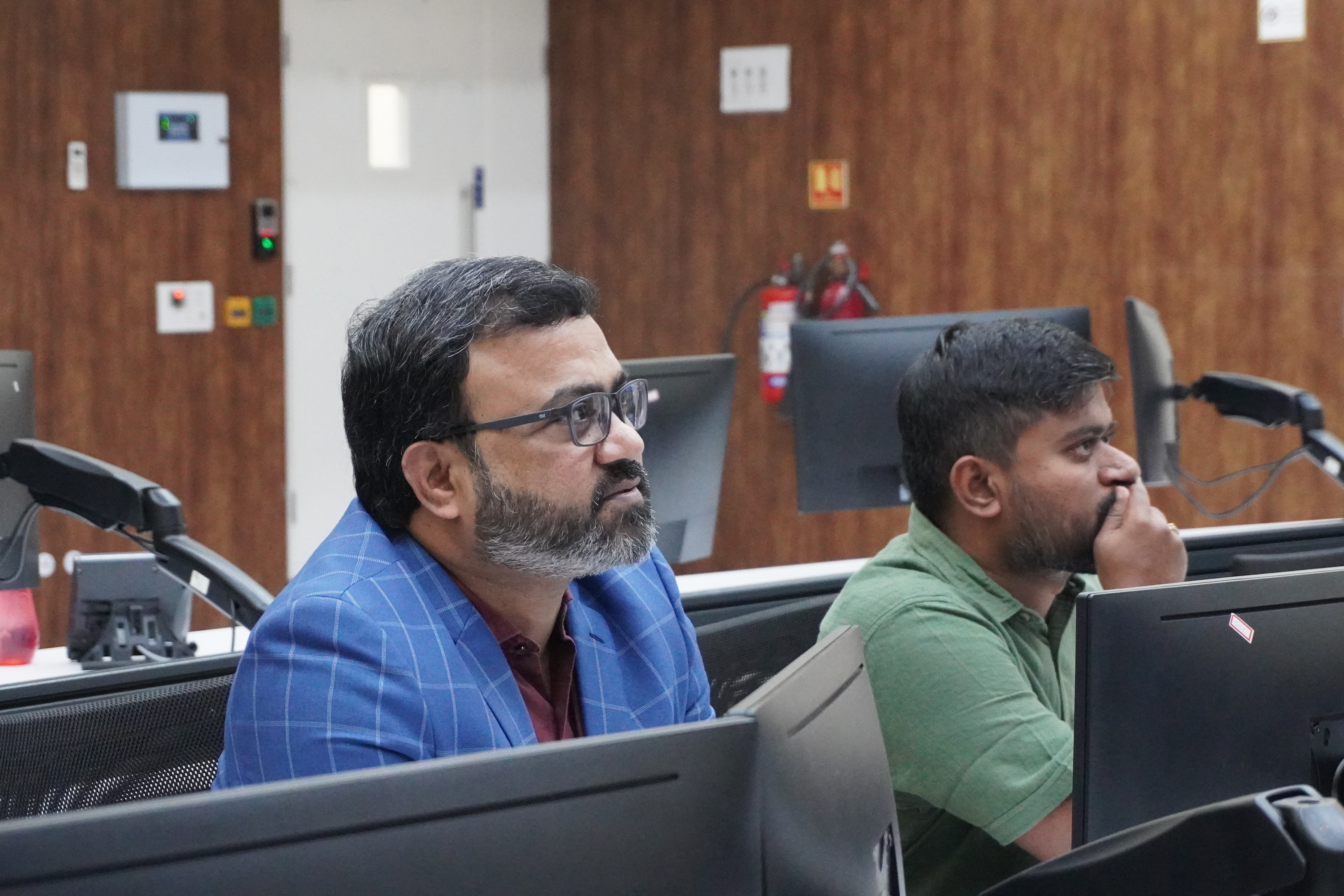
Shivaprasad Mynahalli, founder and director of TelcoSolve, brings a global perspective to the ecosystem. With over two decades in telecom and cybersecurity at Ericsson, Nokia, and Vodafone, he recently expanded TelcoSolve to The Hague through the Dutch Basecamp Program. For Shivaprasad, the Netherlands offers a collaborative innovation environment and access to European markets, enabling the company to advance cutting-edge cybersecurity and telecom solutions.

“The Netherlands is one of Europe’s leading countries for innovation, and also a cybersecurity hub. Whenever standardisations or recommendations are collected from across the European region, the final decision often happens in the Netherlands.”

Shivaprasad Mynahalli, Founder & Director, TelcoSolve
 

With strong investment, active public-private collaboration, and an established cluster network, the Netherlands has created a fertile ground for cybersecurity innovation. This ecosystem not only mitigates cyber risks but also empowers startups, scaleups, and international companies to develop, test, and deploy solutions that address real-world challenges. Provincial Regional Development Agencies co-invest with private VC in cybersecurity startups and scaleups, powering regional innovation hubs like Brainport and Randstad.

The Dutch market equips entrepreneurs, investors, and cybersecurity professionals with the infrastructure, expertise, and collaborative environment to transform ideas into impact and drive the future of digital security across Europe and beyond.

 

More on Cyber Security in NL

To dive deeper, explore our articles on the 10 most important trends in the field of Process Technology and what it’s like working in the industry.